VIVAN Life Sciences Blog

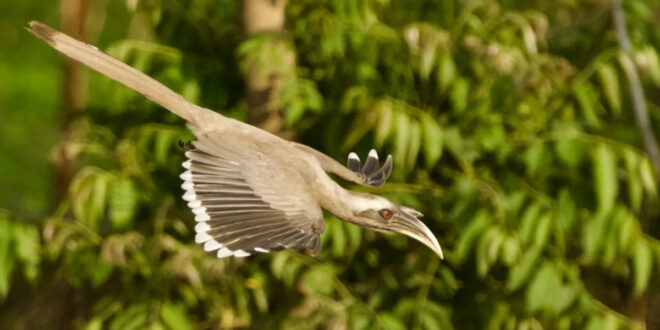
For four consecutive years, Indian grey hornbills have bred successfully in Gujarat’s Gir after disappearing for six decades. Their return is more than a conservation win. It shows how healthy forests depend on old trees, connected habitats, and the wildlife that keeps them alive.
For the fourth year in a row, Indian grey hornbills have bred successfully in Gujarat’s Gir landscape. It is a milestone that represents much more than the return of a single bird.
The species had vanished from Gir sometime between the 1950s and 1960s. Today, after a carefully planned reintroduction programme, the hornbills are nesting, raising chicks and establishing territories once again. Around 40 birds were released in phases between 2021 and 2023, and scientists now say the population is showing signs of becoming self-sustaining.
For the rest of us, it is also a reminder that some birds reveal the health of an entire forest. Hornbills are among them. If they are growing, chances are the forest is too.
A bird that refuses to settle for less
Unlike many birds that can adapt to fragmented landscapes, hornbills are incredibly choosy about where they live.
They need mature forests with giant native trees. They need tree cavities large enough for nesting. They need fruiting trees that produce food across different seasons. Most importantly, they need forests that have remained connected over large areas.
Take away any one of these ingredients, and hornbills struggle.
That is why scientists describe them as indicator species. Their presence tells researchers that a forest still has the structure, diversity, and ecological balance needed to support a wide range of wildlife.
The Gir reintroduction worked not only because birds were released into the wild. Years of habitat restoration, protection, and monitoring made sure the landscape could once again support them.
Hornbills are sometimes called the ‘farmers of the forest’.
The title is well earned.
Most hornbill species feed on fruits, especially figs, berries, and other large forest fruits. Many of these seeds are too large for smaller birds to disperse.
After feeding, they can fly several kilometres before dropping or regurgitating the seeds. The seeds land far away from the parent tree, reducing competition and giving new saplings a better chance to grow.
When forests are restored, young saplings usually receive most of the attention.
But for hornbills, old trees are irreplaceable.
Large trees provide nesting hollows, shade, food, and shelter for countless birds, mammals, reptiles, and insects. Many develop cavities naturally only after decades of growth.
Once these giants disappear, replacing them is not something that can happen overnight.
When one species helps many others
The Gir programme did not focus solely on releasing birds. Forest officials tracked their movements, restored suitable habitat, and monitored breeding success while involving local communities in protecting the landscape. The latest findings suggest the birds have settled into the landscape and are breeding much like a wild population would.
India is home to nine species of hornbills, from the Indian grey hornbill seen across the plains to the striking great hornbill of the Western Ghats and northeast.
Many face growing pressure from habitat loss, the disappearance of old nesting trees, and fragmented forests. Their future depends on something unusually simple.
Protect large forests.
Protect old trees.
Protect the natural links that allow wildlife to move freely.
That is why the recent breeding success in Gir is about much more than a bird making a comeback after 60 years. It is a sign that when forests are given the chance to recover, nature knows exactly how to heal itself.