VIVAN Life Sciences Blog

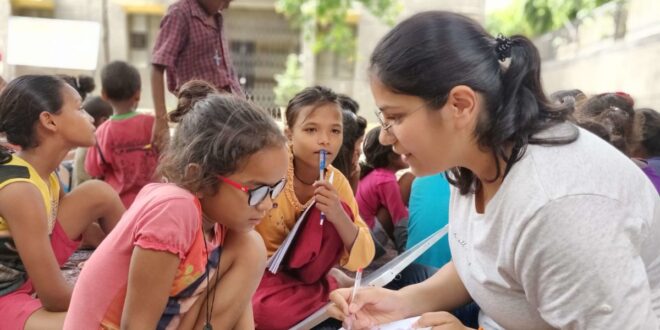
With over 1,200 active volunteers and no physical classrooms, Pehchaan has supported 5,000+ slum children in Delhi through 10 years of learning. The initiative’s 94% pass rate shows what’s possible when consistent mentorship, peer learning, and community ownership come together to make education meaningful, flexible, and deeply rooted in impact.
Just 50 metres from the World Health Organization’s Delhi office lies a slum that is home to nearly 10,000 people. It’s a place where basic necessities like clean water and healthcare are scarce. Until a few years ago, education was an afterthought.
But within this stark landscape, stories of transformation have taken root, led not by institutions but by the very children once written off by the system. Among them is Deepak Kumar — the first child from his entire slum to clear Class 12 board exams and gain admission to Delhi University.
A chalkboard and a second chance
Deepak was just a child when he first walked into Pehchaan’s informal classroom, a shaded temple space near the slum. At the time, he says, college felt like a fantasy. His father, a milk supplier to local tea shops, and his mother, a homemaker, barely made enough to get by. Education wasn’t discouraged, but it wasn’t prioritised either.
“The school is like my family,” says Deepak, now 19 and pursuing a B.Com (Hons) degree at Delhi University. “In my 10-year journey, it has become a very important part of my life. I attend school regularly, and this is where I received a lot of love, care, and guidance.”
He joined the centre in 2015 when the schoolwas still finding its feet. Today, he’s not just a college student but a symbol of what’s possible when children are given the tools and the belief to rise.
“When I passed my 12th, I told my family, and their reaction was filled with joy and surprise,” Deepak recalls. “They knew I would pass, but they didn’t expect me to score such good marks — that truly made them proud and emotional.”
He scored 86 percent overall, including a remarkable 93 percent in Economics without formal tuition.
His CUET (Common University Entrance Test) results brought another wave of celebration. “When I got admission into a college, my parents were overwhelmed with happiness. It was a very emotional moment for them. They have always been very supportive of me and my dreams, and they continue to encourage me to achieve my future goals.”
“We’re not building a brand. We’re building a model.”
The street school began in 2015 with just five children. Its founder, Akash Tandon, then a young working professional, had grown frustrated with short-term social work.
“We were doing food drives and distributing clothes, but the impact ended as soon as we left,” he says. “We realised we needed to invest in something permanent, something that could stay even after we’re gone.”
That turning point came while witnessing children from a slum swim across a drainage canal near ITO, mistaking it for a swimming pool. “Someone had to tell them it was dangerous. More importantly, someone had to give them a shot at understanding the world differently.”
That “someone” became Tandon and a group of like-minded volunteers.
The ripple effect of Deepak’s dream
For Akash Deepak’s story is the very essence of why Pehchaan exists. “He was our first board exam student — no coaching, no fancy prep. Just notes, peer study, and the support of our volunteers,” he says. “And now, when people in the community talk about college, they point to Deepak and say, ‘If he can do it, maybe my child can too.’”
The change wasn’t without resistance. Initially, even Deepak’s own family was hesitant to let him continue. Neighbours questioned why a boy from the slum needed to study after high school. But that’s where Pehchaan stepped in, convincing parents, arranging funds, and offering guidance.
“His journey has become a living testimony. Now, others in the community believe college is possible,” Tandon says.
The financial foundation of Pehchaan
Pehchaan is primarily funded through individual donations, crowdfunding campaigns, and corporate CSR partnerships. With the help of in-kind support such as digital devices, stationery, and infrastructure support from socially responsible organisations and individuals, the initiative receives a boost for keeping up with their on-ground work.
While they do not receive direct government grants, they make sure to collaborate with various NGOs and educational bodies for specific projects or training initiatives. This decentralized and people-powered approach has given the initiative agility.
Learning beyond the books
At Pehchaan, education isn’t confined to academics. The volunteers, like 26-year-old Mehak Arora, also instill values, communication skills, and confidence.
“Even the smallest effort, when done with love, can create a ripple of change,” she says. “I’ve seen it, in how the children now speak after our ‘Good Habits’ initiative, in how they dream bigger, in how Deepak made it to Delhi University.”
What began as lesson planning for Mehak turned into a transformative journey of her own, shaped by the resilience and warmth of students like Deepak. “They’ve taught me patience and how to find happiness in the smallest of things – like drawing a rainbow or learning a new word. Creatively, I grew from inventing fun ways to explain concepts to weaving art into lessons. But more than anything, I learned how powerful love and consistency can be in shaping young lives. A learning experience through and through,” she fondly adds.
The real measure of success
What sets the school apart is not the number of students it teaches, but how it shifts mindsets. Much to one’s amazement, this institute functions just like a proper educational institution. Each student is registered, issued an identity card, tracked for attendance and performance, and placed in small learning groups, one volunteer for every four to five students. The team has even developed its own customised curriculum, making education relatable, skill-based, and effective.
A future that is shaped by hope
Deepak still wakes up before dawn to help his father with the milk supply before heading to college. But his dreams now stretch far beyond the slum.
“My dream is to become a financial manager,” he says. “This has become clearer and feels more achievable now. Everyone’s love, support, and the environment motivate me to work harder and dream bigger.”
Ref : The Better India